


Pain under the left shoulder blade from the back is not a rare occurrence and can be caused by various reasons - awkward sudden movements causing muscle strain, or a sudden change in body position.
But, if they are regular and long-lasting, of varying nature and intensity, this is true evidence of various pathological processes in the scapula itself or in the internal organs lying in its projection.
5 causes of pain under the left shoulder blade
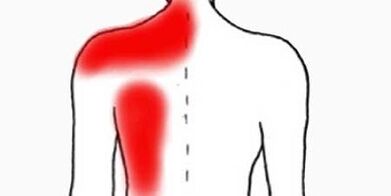
From the point of view of the anatomy of the body, the manifestation of pain under the left shoulder blade on the left side is due to several main groups of causative factors.
- Musculoskeletal pathologies.
- Diseases of a cardiac nature.
- Disturbances in the bronchopulmonary system.
- Functional changes in the gastrointestinal tract and spleen.
- Pathological processes in the scapula itself.
Let's look at it point by point.
Musculoskeletal disorders
The most common cause of subscapular pain is osteochondrosis.With this disease, destruction of cartilage and bone tissue occurs in various parts of the spine.
Inflammatory reactions cause tissue swelling at the base of the spinal nerve roots, which causes compression of them.Osteochondrosis of the thoracic or cervical spine develops, accompanied by sharp, acute or dull pain under the left shoulder blade.
The development of degenerative changes in the cervical vertebrae, caused by their displacement, the formation of osteophytes and hernial protrusion of discs, leads to the formation of swelling and disruption of cerebral venous circulation.
Pain syndrome develops in the occipital zone, reflected by numb pain under the left shoulder blade.The intensity of pain symptoms usually appears in the morning.Various movements of the neck increase the pain.My hands go numb and I feel dizzy.
Among vertebral pathologies that cause pain under the left shoulder blade from behind from the back, degenerative processes play an important role, creating conditions for the development of radicular syndrome:
- vertebral hernia formations;
- intervertebral protrusions;
- vertebral deformations due to osteophytes (bone spikes);
- displacement of facet joints (intervertebral);
- prolapse of the nucleus pulposus.
The manifestation of various signs depends on the location of the process:
- skin paresthesia (weak sensitivity);
- pain under the left shoulder blade from the back, radiating to the arm;
- involuntary contraction of the finger muscles;
- proximal muscle weakness in the arms, or complete atrophy.
In this section you can add a disease of a systemic nature (spondyloarthritis), which causes damage to connective tissues throughout the body.Basically, the discs between the thoracic vertebrae are affected.
A contributing factor is the development of spinal dysplasia with subsequent fusion of discs.As a result, severe pain appears under the left shoulder blade when inhaling.
Similar symptoms are observed with myositis (inflammatory reactions in the muscle mass of the back).Movement or full breathing increases the pain.
Cardiac pathologies

Among the reasons for the development of these manifestations, cardiac pathologies occupy the second most important place.They manifest themselves as sudden compressive, sharp and burning pains under the left shoulder blade in the heart area.
They can be provoked by anginal disease (lack of blood, nutrients and oxygen supply to the heart), excessive loads and stress.The pain that arises behind the sternum radiates to the subscapular area, pain covers the jaw and arm on the left side of the body.
Accompanied by shortness of breath and panic (fear of death).
If relief with nitroglycerin preparations does not work within 10-15 minutes and the attack lasts more than half an hour, this no longer indicates angina pectoris, but the complete development of a heart attack.
In some cases, there may not be any significant pain.In the left subscapular area, only burning, tingling and numbness of the arm are felt.
A very dangerous condition in which subscapular pain is noted is a diffuse dissection of the wall of the thoracic aorta (aneurysm), forming two blood flow channels.Initially localized in the chest, the pain syndrome gradually migrates to the left area of the scapula and descends to the lower back.
The danger is the real possibility of rupture of this largest artery and the formation of internal hemorrhage, often ending in death.Hypotension (a sharp decrease in blood pressure) is the first symptom of the pathology.
Contribute to the formation of pain syndrome:
- focal or diffuse inflammatory processes in the heart muscle (myocarditis);
- inflammatory reactions in the connective tissue of the heart (pericarditis);
- microbial inflammation of the inner lining of the heart (endocarditis).
Bronchopulmonary pathologies
In many cases, subscapular left-sided pain in the back from the back is a consequence of bronchitis, tonsillitis, pharyngitis, tonsillitis or ARVI, when they are complicated by bacterial left-sided pneumonia.
Particular attention should be paid to inflammatory processes in the pleura when they develop as a result of pneumonia.Left-sided pain symptoms with pleurisy can be a harbinger of a heart attack or the development of tuberculous processes in the thoracic lymph nodes and lungs.
Inflammatory reactions in the lung tissue sometimes lead to its melting, forming purulent-necrotic cavities.The death of purulent tissue is accompanied by:
- pain symptoms and wheezing in the chest;
- shortness of breath and fever;
- profuse sweating and chills;
- cough, weight loss and pain when inhaling under the left shoulder blade.
Functional changes in the gastrointestinal tract
It is important to know that one of the symptoms of dangerous gastrointestinal diseases is left-sided subscapular pain.It manifests itself due to:
- Perforation of a stomach ulcer located in its upper section.The symptom is complemented by fever, severe muscle tension in the abdomen, vomiting, and sharp burning pain.
- Aseptic inflammatory reactions in the pancreas.The disease is life-threatening in nature, caused by the development of necrosis and degeneration of the gland.Left-sided subscapular pain symptoms are accompanied by subcostal and epigastric pain, repeated vomiting and flatulence, dyspepsia and fever.
- Injuries to the spleen followed by two-stage rupture of the organ.The process is characterized by rupture of the splenic parenchyma, without violating the integrity of its capsule.As a result, bleeding does not occur immediately, as blood accumulates in the subcapsular space.
Only the manifestation of dull pain under the left shoulder blade or under the ribs indicates a dangerous problem.Excessive accumulation of blood under the capsule provokes its rupture and intense bleeding.
All these conditions are a sure indicator for immediate surgical intervention.
Shoulder injuries
Pathological processes in the glenohumeral joint are almost always accompanied by pain under the left shoulder blade when raising the arm.This symptom is caused by soreness of the musculo-ligamentous apparatus.
It is its chronic overstrain that gives acute, burning or aching pain symptoms.
Provoke the symptom:
- scapula bone injuries;
- closed elbow and nerve injuries;
- gunshot wounds;
- bursitis (inflammation of the synovium of the shoulder joint);
- tuberculosis and tumor neoplasms.
Which doctor should I consult for pain under my left shoulder blade?

The systematic manifestation of pain under the left shoulder blade, especially without any obvious signs, requires examination and identification of the true causes.
If your back hurts under the left shoulder blade at the back, and the pain does not go away within 3-4 days, you should consult a doctor.
The specialist will determine the causes of pain in the back under the left shoulder blade, relieve the severity of the pain and prescribe appropriate treatment.
A visit to a traumatologist will help determine the further direction of treatment and the choice of a specialist doctor - orthopedic traumatologist, cardiologist, pulmonologist, gastroenterologist or surgeon.
The help of a massage therapist, physiotherapist or chiropractor is not excluded.
Survey
Diagnostic studies are carried out in accordance with the preliminary diagnosis.
May consist of:
- radiography of the peritoneum and spine in the thoracic region (MRI and CT if necessary);
- ultrasound examination of the gastrointestinal tract;
- ultrasound and electrocardiographic examination of the heart;
- fibrogastroduodenoscopy;
- a complete metabolic package of studies.
The type of manifestation of pain syndromes helps to carry out a differential diagnosis of vertebrogenic and cardiac pathologies.
The characteristics of painful symptoms, their frequency and connection with changes in body position, physical activity and drug influence are taken into account.
Treatment of pain under the left shoulder blade from behind from the back
There is no single protocol for the treatment of left-sided subscapular pain.Therapeutic tactics depend on the genesis of the disease.If a pain symptom is associated with disorders of musculoskeletal functions, without taking into account somatic injuries (injuries), treatment includes:

- Peace.Sometimes proper rest relieves the effects of muscle strain, restores their function and relieves pain.
- Drug therapy is used in the presence of inflammatory pathologies.Non-steroidal anti-inflammatory drugs are prescribed.
- Antidepressants for chronic pain.
- Muscle spasms are relieved by muscle relaxants.A more effective result is achieved when used in combination with non-steroidal drugs, analgesics, massage, physiotherapy and exercise therapy.
- Prescribing manual therapy sessions helps relieve muscle blocks, reduce pain and improve joint mobility.
- Acupuncture – restores nerve conduction, reduces pain.
- Massage techniques help relieve muscle spasms, improve blood circulation and general condition.
For bronchopulmonary, cardiological and gastrointestinal pathologies, an individual treatment program is prescribed with the selection of vitamin and drug therapy - antibiotics, anti-inflammatory and painkillers.
Patients with signs of heart attack and angina are hospitalized.When diagnosing an aneurysm and severe gastrointestinal pathologies, surgical treatment is used.
Prevention
Prevention of pain lies in measures to prevent it.
Directed by:
- to develop a lifestyle without bad habits;
- on a balanced diet;
- the ability to properly distribute rest and stress;
- timely detection and treatment of infectious diseases;
- maintaining psycho-emotional balance.
The basis of prevention is regular consultative medical examinations, which will help to correct pathological disorders in a timely manner.